
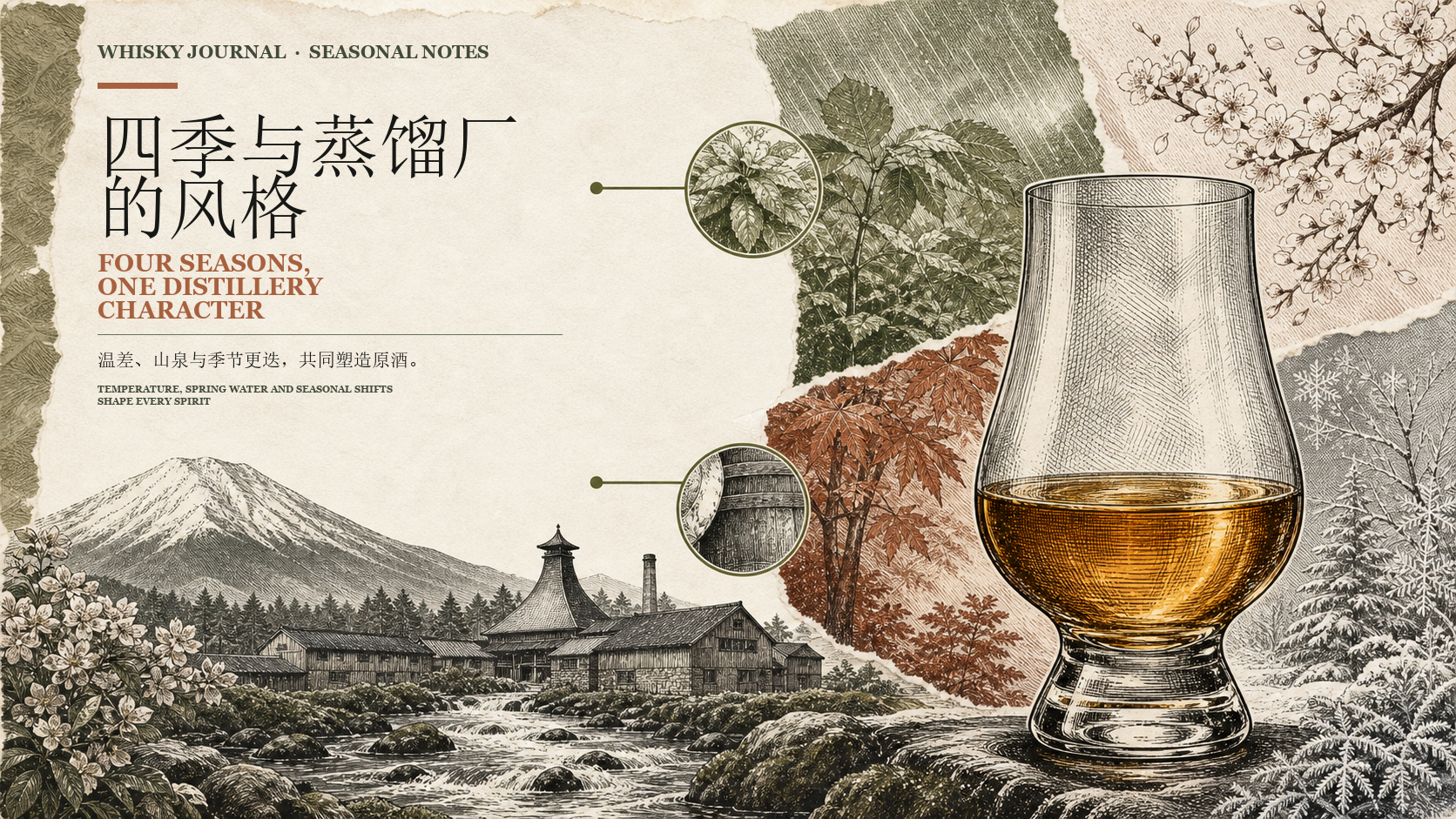
A YEAR WRITTEN INTO THE SPIRIT
风格,是四季留下的总和。
多数威士忌爱好者聚焦桶型、泥煤与调和工艺,却常常忽略一个底层变量: 四季流转带来的环境变化,会从酿造到熟成全链条烙印蒸馏厂专属风格。 日本多山地季风气候,四季分明、寒暑温差清晰,再加上各家酒厂独有的 山泉水源,春夏秋冬的差异被完整锁进每一批原酒里,最终沉淀成日威 标志性的细腻、均衡与层次差异,这也是单一蒸馏厂常年风格稳定却又 年年有细微变化的核心原因。
稳定的酒厂风格,也容纳着每一年细微不同的季节笔迹。
Style is the sum of the seasons.
Most whisky fans focus on cask types, peat and blending craft, yet overlook a fundamental factor: seasonal environmental shifts leave distinct imprints on a distillery’s style across production and maturation chains. Japan features a mountainous monsoon climate with four distinct seasons and clear temperature gaps, paired with an exclusive mountain spring water for each distillery. Differences across spring, summer, autumn and winter are sealed into every batch of new make spirit, forming the signature delicacy and balance of Japanese whisky, as well as subtle annual variations within one consistent distillery profile.
A consistent house style still carries the fine handwriting of each passing year.
水源:四季水文波动,奠定酒体基底
Water: seasonal hydrological variations lay the spirit foundation
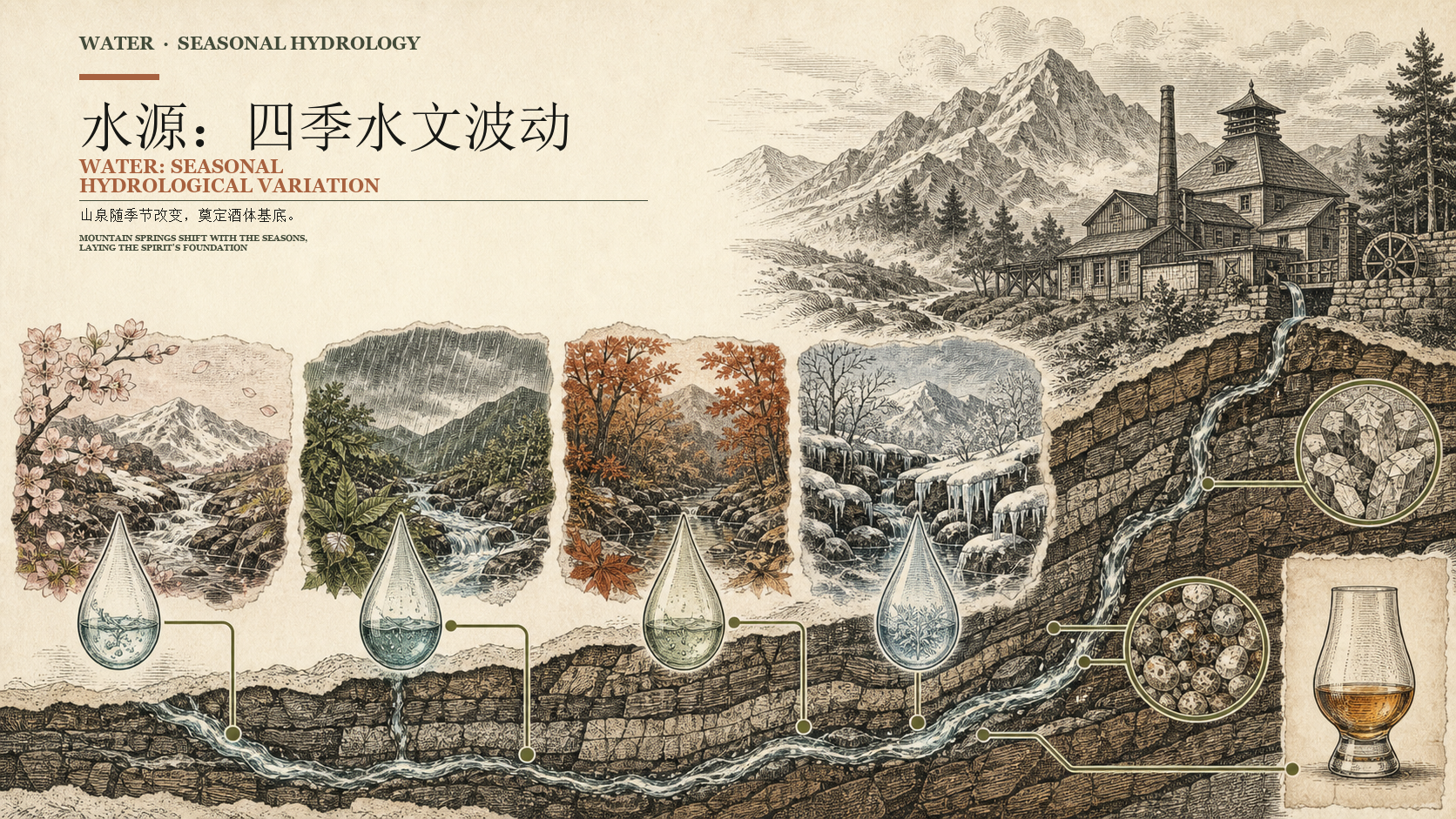
日本蒸馏厂大多选址深山林间,依赖天然山泉作为酿造全程用水,从浸泡 大麦、糖化稀释到降度装桶全程离不开山泉。同一处山泉,四季水质并不 恒定:春季融雪带来充沛软水,矿物质含量偏低,酿出的原酒干净清甜、 花果香气突出;夏季雨季径流加快,岩层溶出微量矿物元素,酒体多了一丝 清冽骨架;秋冬枯水期地下水渗透周期更长,矿物质浓度小幅提升,赋予原酒 更温润的厚重质感。
不同于苏格兰部分产区水源稳定度更高,日本山地山泉随季节波动明显。 酒厂会根据不同季节水质微调糖化、发酵参数,把四季水文特征转化为酒体 风味层次,也让同一家酒厂不同批次原酒拥有自然的季节辨识度。
Nearly all Japanese distilleries nestle in mountain forests and rely on natural spring water for malting, mashing, dilution and cask filling. Spring water from the same source shifts seasonally: snowmelt in spring yields soft low-mineral water for clean, fruity new make; faster rainfall runoff in summer brings subtle minerals to add crisp structure; longer underground filtration in dry autumn and winter raises mineral concentration slightly to create richer, mellow spirit.
Compared with more stable water sources in parts of Scotland, Japanese mountain springs fluctuate noticeably. Distilleries adjust mashing and fermentation parameters seasonally, translating hydrological traits into flavour layers and creating natural seasonal distinctions between batches from the same distillery.
发酵与蒸馏:气温改变风味轮廓
Fermentation & distillation: temperature reshapes flavour
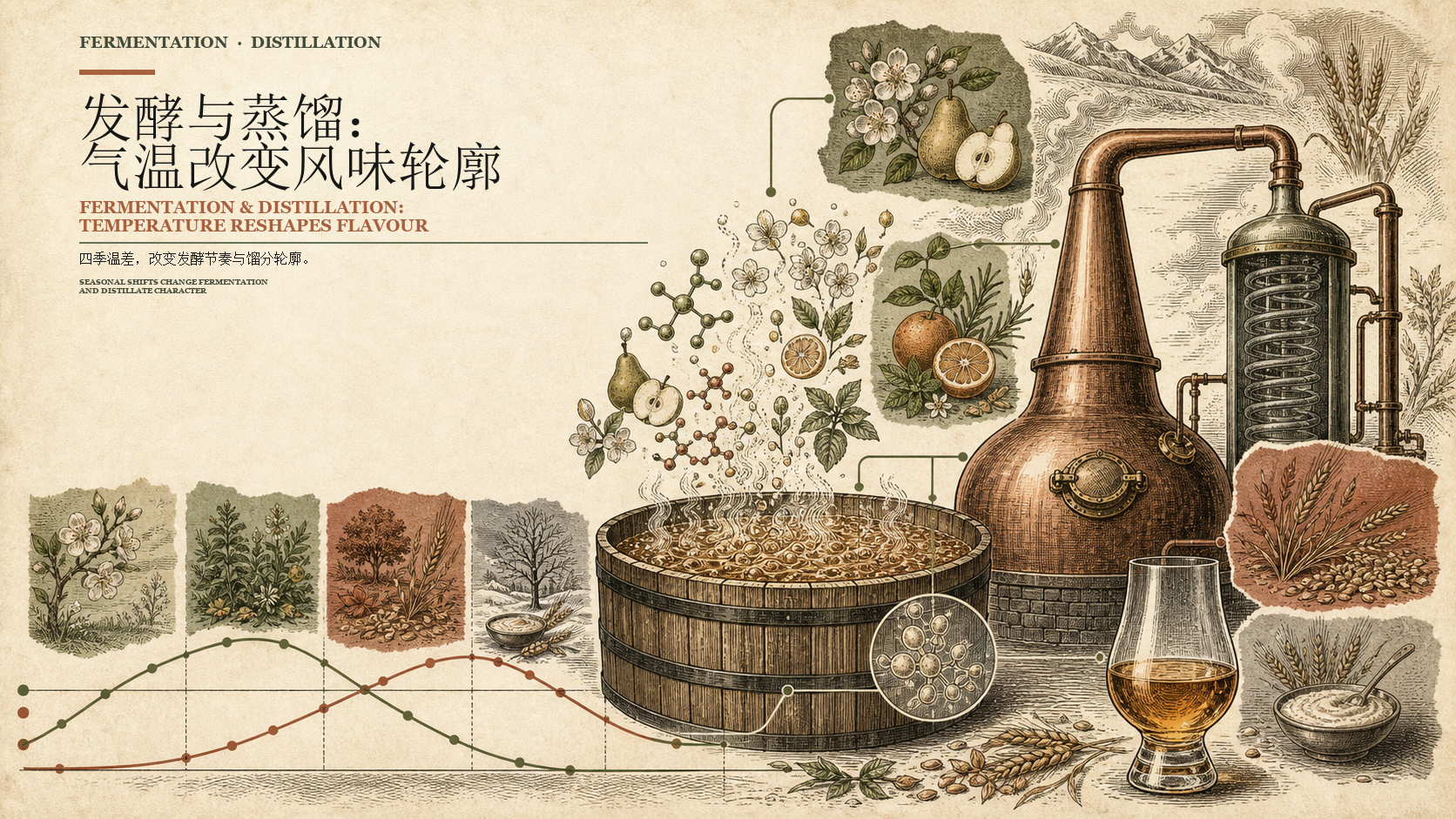
发酵是风味生成的关键环节,酵母菌活性对环境温度极其敏感。春季气温 温和平稳,发酵速率舒缓,能充分生成酯类物质,酝酿出饱满梨香、苹果香 与蜂蜜甜感;夏季高温加快酵母代谢,催生更多清新草本与柑橘调性,但控温 不当也容易产生杂味;秋季凉爽干爽,发酵节奏适中;冬季低温拉长发酵周期, 带来柔和奶香、谷物甜韵与更温润内敛的酒体。
蒸馏同样受室温影响:夏季蒸馏器升温快、馏出节奏偏轻快,轻馏分占比 略高,风格清新轻盈;冬季升温平缓,酒液回流更充分,重馏分的醇厚感与 油脂感更突出。同一条蒸馏线,仅凭四季室温差异,就能自然产出偏向不同的 原酒基料,为后续调和提供丰富素材。
Yeast activity during fermentation, the core flavour-forming stage, is highly temperature-sensitive. Mild spring temperatures support slow steady fermentation to produce esters with rich pear, apple and honey notes; warmer summer speeds up yeast metabolism for bright herbal and citrus tones (with off-flavour risks without strict cooling); cool autumn delivers balanced moderate fermentation; cold winter extends fermentation cycles for gentle milky cereal sweetness and softer spirit.
Distillation is also affected by ambient temperature: faster heating in summer yields more light fractions for fresh light spirit; slower winter heating enables fuller reflux for richer, oilier heavy fractions. The same distillation setup naturally produces two styles of base spirit across seasons, supplying diverse blending materials.
桶陈熟成:四季温差打磨平衡
Cask maturation: seasonal cycles refine balanced texture
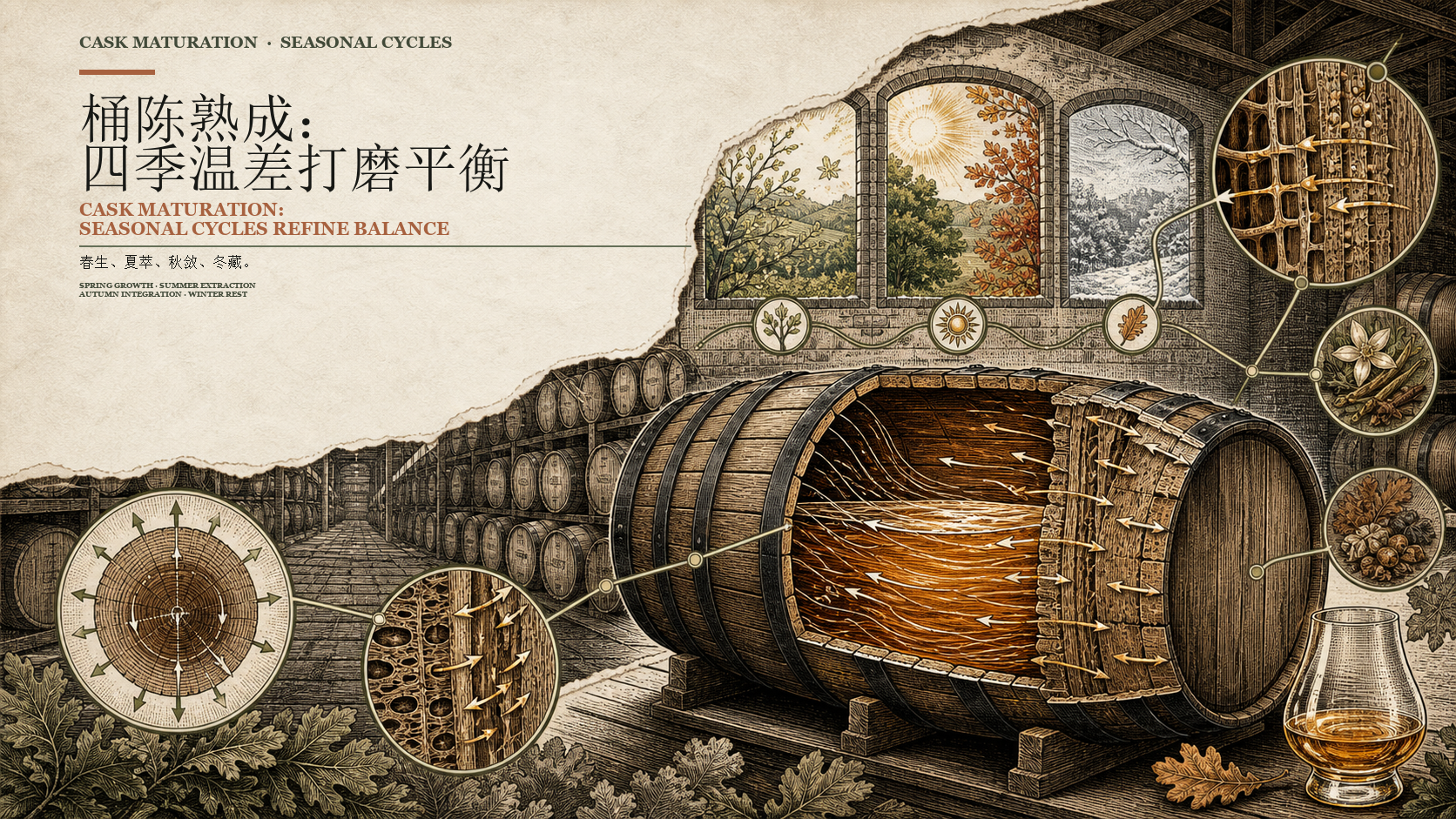
日本仓库多为林间常温仓储,不全程恒温控湿,完整跟随四季气温起伏循环。 夏季温度升高,木桶呼吸加快,橡木单宁、香草、椰子等物质快速萃取融入 酒液;秋冬降温放缓萃取速度,同时昼夜温差与季节温差带来规律性的热胀 冷缩,让酒液反复渗入橡木深层,带出木桶深处沉淀的陈年风味。
常年往复的四季温差循环,避免了单一高温持续萃取导致的木质苦涩,也 规避了持续低温带来的熟成迟缓。春生、夏萃、秋敛、冬藏,一年一轮的 气候节律缓慢柔化酒精刺激,让果香、桶香、谷物香逐步融合,最终形成 日威标志性的温润平衡感。
Most Japanese distilleries use non-air-conditioned forest warehouses exposed to natural seasonal cycles. Higher summer temperatures accelerate cask respiration and extraction of tannins, vanilla and coconut; cooler winter slows extraction, while seasonal and diurnal temperature swings create regular expansion and contraction, pushing spirit deep into oak to unlock aged layered compounds.
Repeating annual temperature cycles prevent bitter over-extraction from constant heat and sluggish maturation from permanent cold. The rhythm of spring growth, summer extraction, autumn integration and winter storage softens alcohol bite and unites fruit, oak and cereal aromas gradually, crafting the iconic gentle balance of Japanese whisky — a terroir edge hard to replicate in fully climate-controlled warehouses.
酒厂风格恒定的秘密
Why distillery style stays consistent
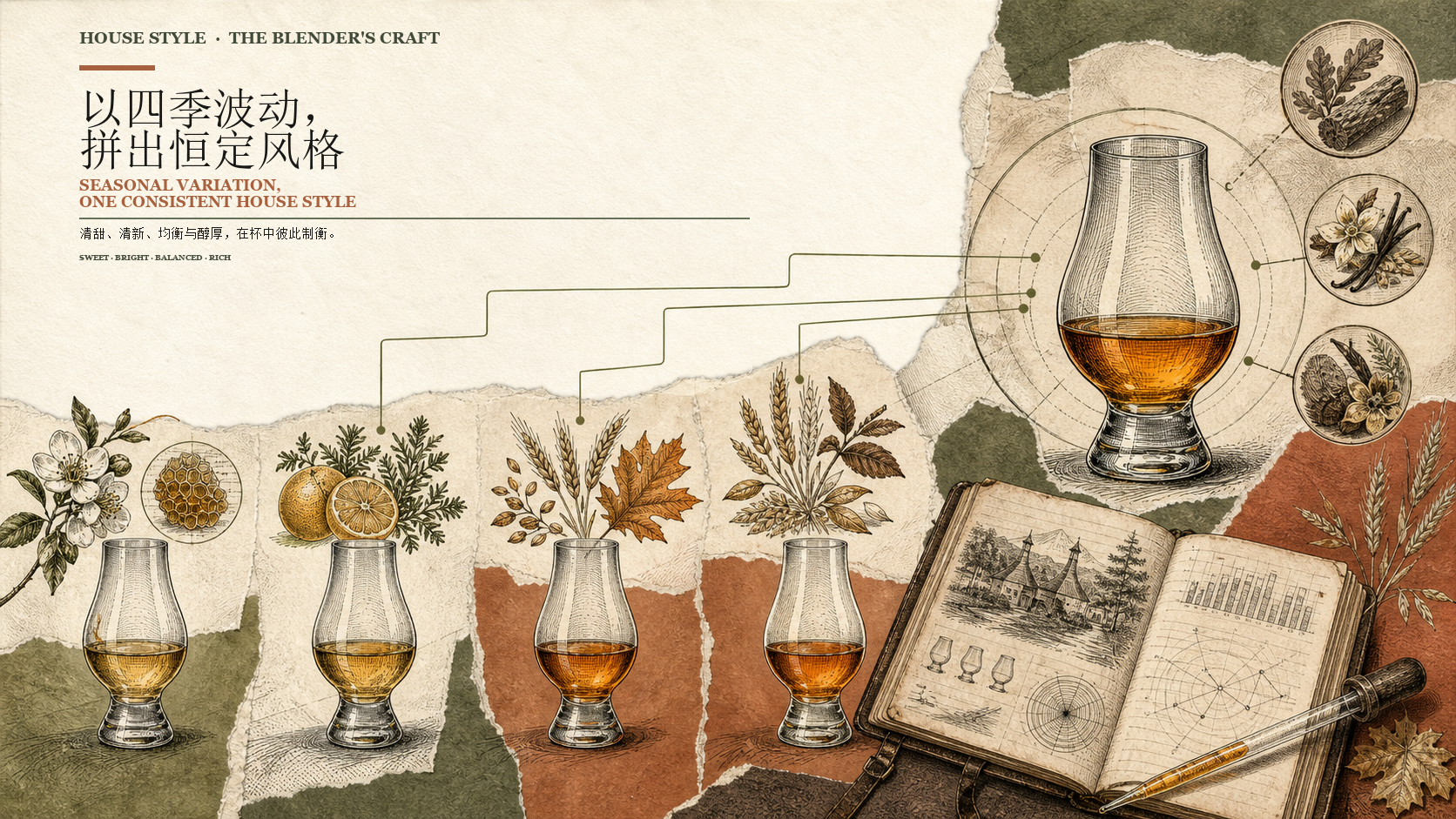
很多人疑惑:四季原料与原酒差异明显,为何知名日威酒厂风格数十年稳定 统一?核心在于日本酒厂极致的调和哲学。酿酒师不会单一使用某一个季节 的原酒,而是把春款清甜基酒、夏款清新基酒、秋款均衡基酒、冬款醇厚 基酒按比例拼接互补。
春季花果香补足秋冬的厚重沉闷,冬季醇厚酒体承接夏季风味的单薄,四季 原酒互相制衡,最终对外呈现稳定且层次丰富的酒厂专属风格。批次间细微 的风味差别,恰恰是当年四季气候差异留下的风土印记。
A common question remains: with seasonal raw material and spirit differences, how do top Japanese distilleries retain consistent style for decades? The answer lies in master blending philosophy. Blenders combine spring’s sweet light spirit, summer’s bright spirit, autumn’s balanced spirit and winter’s rich spirit in precise proportions instead of using single-season stock.
Spring fruity notes offset winter heaviness, while winter richness complements lighter summer profiles. Seasonal spirits balance one another to deliver a steady layered house style, with tiny batch variations acting as tangible terroir marks of that year’s unique weather patterns.
品鉴:读懂杯中的四季
Tasting guide: trace seasonal marks in your glass
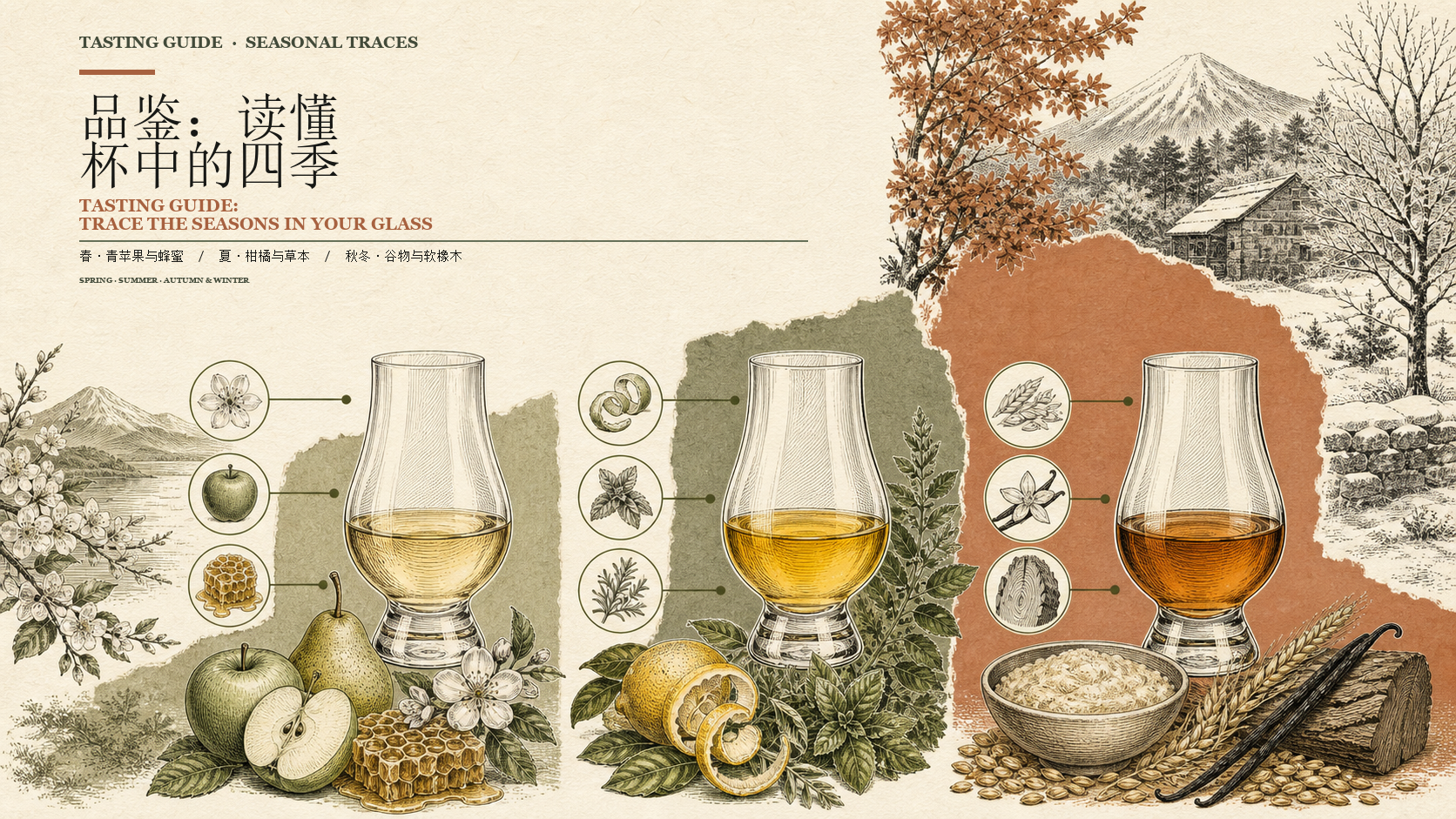
品鉴日本单一蒸馏厂威士忌时,可以留意这些细节区分季节风土影响:
When tasting single-distillery Japanese whisky, use these cues to spot seasonal terroir influence:
偏春季基酒
青苹果 · 梨 · 蜂蜜甜 · 通透清爽
Spring-led spirit
Higher spring spirit ratio: green apple, pear, honey sweetness with bright clean texture.
偏夏季基酒
柑橘 · 草本 · 鲜活果香 · 轻快明亮
Summer-led spirit
Higher summer spirit ratio: citrus, herbal bright fruit with light lively palate.
偏秋冬基酒
奶香 · 谷物甜 · 温润木质 · 绵长柔和
Autumn and winter-led spirit
Higher autumn/winter spirit ratio: milky cereal sweetness, soft oak and long gentle finish.
结语 · CONCLUSION
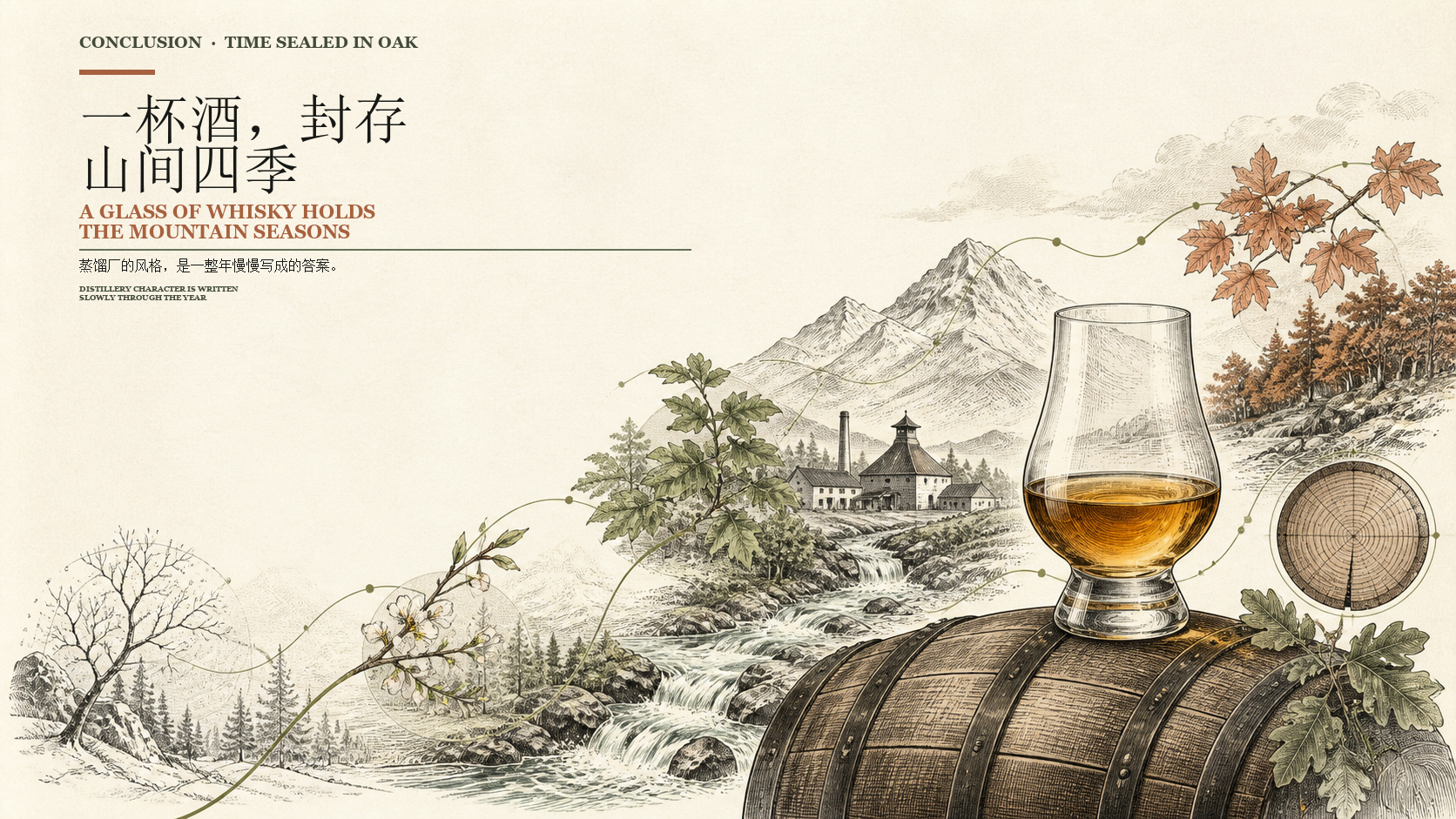
一杯酒,封存山间四季。
蒸馏厂的风格从不是某一刻的工艺定格,而是一整年四季轮回慢慢书写的答案。
山泉随寒暑变换水质,发酵随冷暖调整风味,桶陈随温差沉淀层次,再由 酿酒师把四季风物调和成一杯均衡。苏格兰慢熟依靠漫长岁月,而日本 威士忌的细腻风骨,藏在一年又一年春夏秋冬的交替往复里。
下一次品鉴日威时,杯中每一缕层次,都是山间四季流转,封存在橡木桶里的 时光风物。
IN SHORT
A glass holds the mountain seasons.
A distillery’s style is never fixed by a single craft choice, but written slowly by the annual cycle of four seasons.
Spring water shifts with seasons, fermentation adapts to temperature, cask maturation builds depth via thermal cycles, and blenders weave all seasonal traits into one balanced glass. While Scotch relies on long slow ageing, the delicate character of Japanese whisky is forged endlessly through the repeating rhythm of four seasons year after year.
The next time you sip Japanese whisky, every layer of aroma captures the mountain seasons locked inside oak across time.