
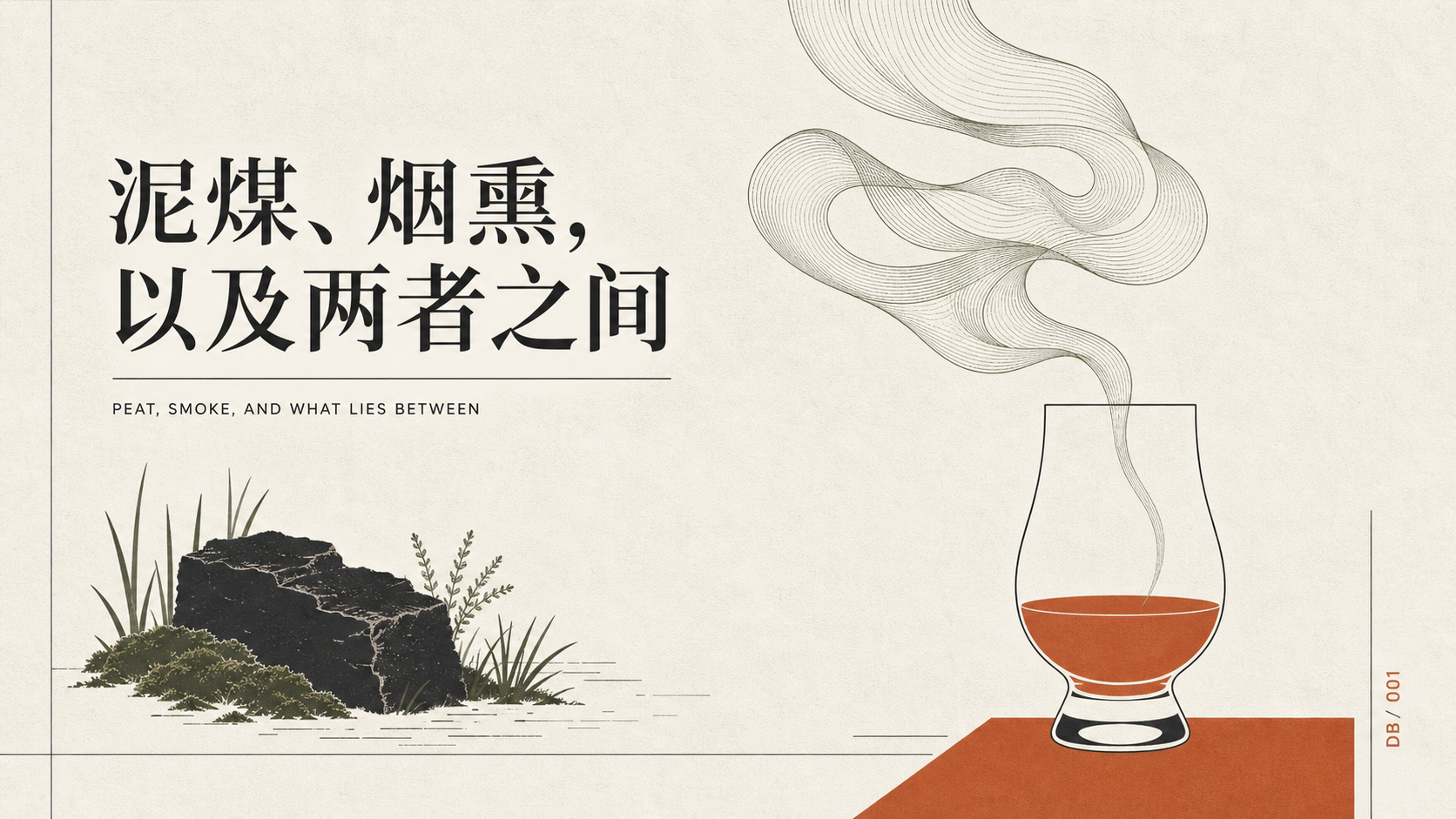
A WORKING DEFINITION
先把两个词分开。
在威士忌品鉴中,泥煤(Peaty)和烟熏(Smoky)经常同时出现, 却不是同义词。二者更接近原料本源与风味结果、特殊分支与通用大类之间的关系。
泥煤是因,专属烟熏是果。
Begin by separating the terms.
In whisky tasting, “peaty” and “smoky” often arrive together, but they are not synonyms. One describes a particular source; the other describes a much broader sensory outcome.
Peat is the cause; its distinctive smoke is the result.
泥煤:风味的本源原料
Peat: the source material
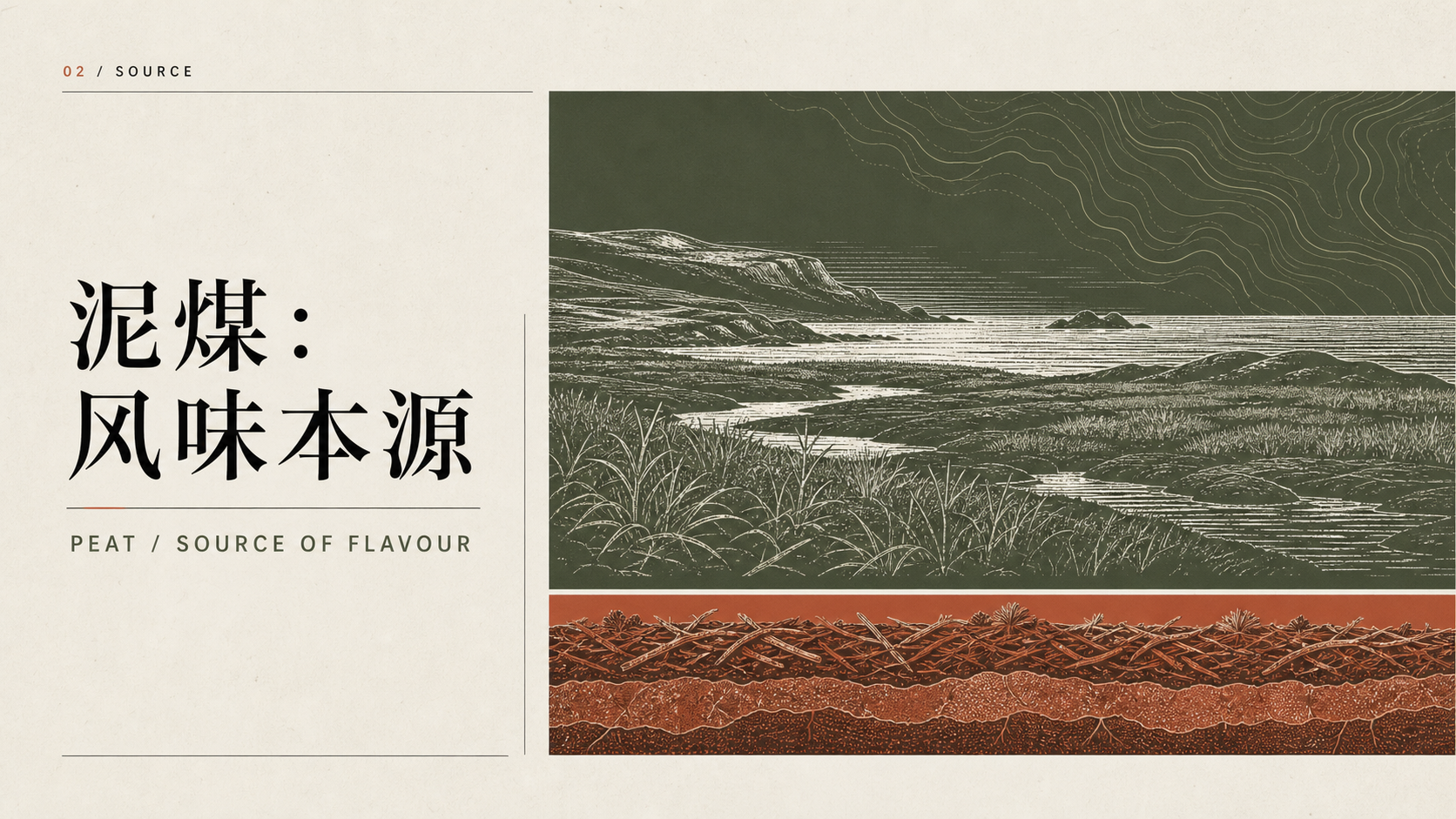
泥煤是沼泽中千年植物残体在积水、缺氧环境下缓慢碳化形成的天然有机质。它曾是苏格兰岛屿地区的重要燃料,也是泥煤风味威士忌的核心源头。泥煤本身并不是杯中的风味,而是承载与释放风味物质的原料。
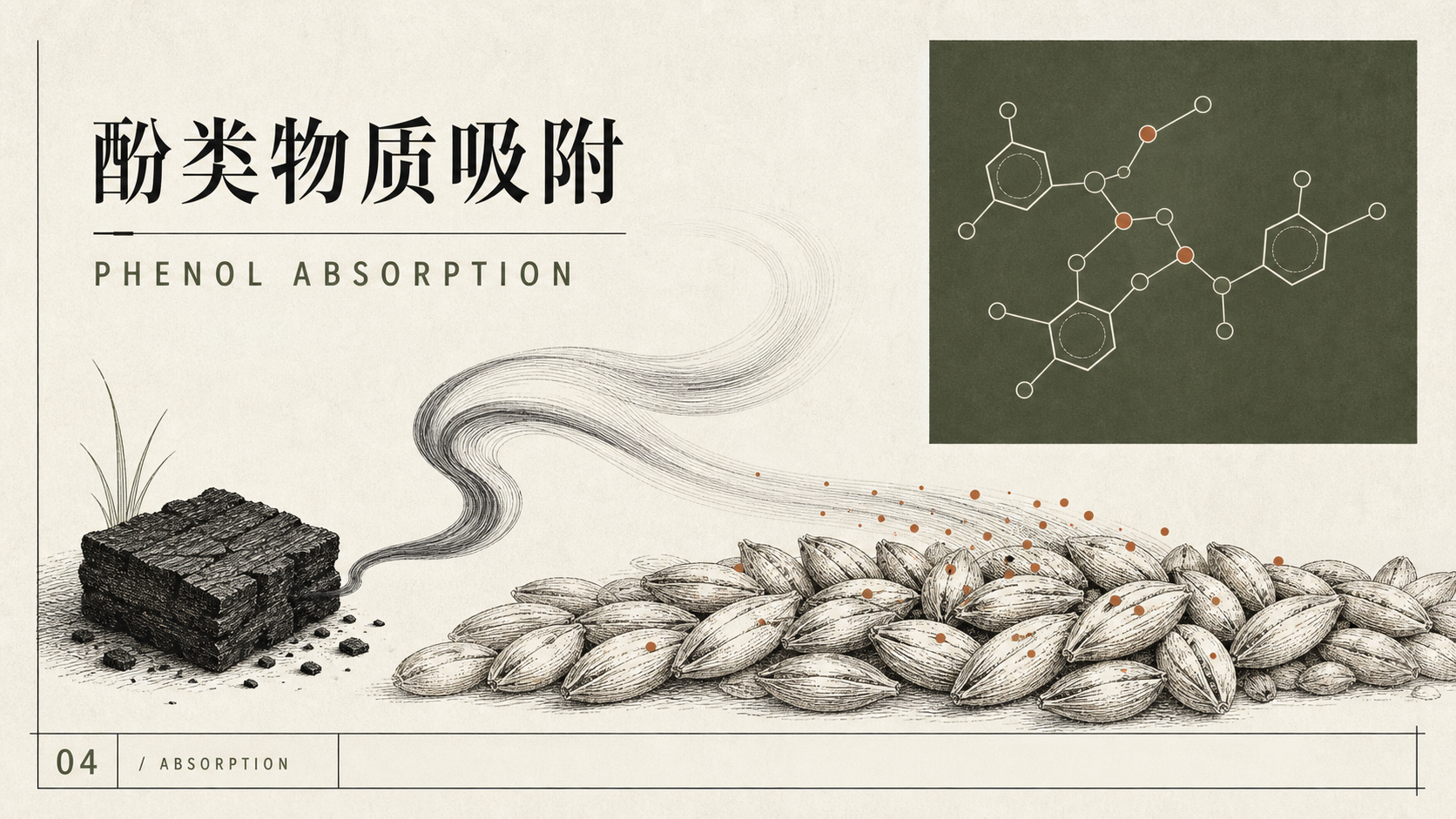
燃烧时,泥煤会释放苯酚、甲酚、愈创木酚等酚类物质。行业常用 PPM(酚值)描述麦芽中的酚类浓度;数值通常能帮助理解原料强度,却不能单独决定最终酒液闻起来有多“烟”。
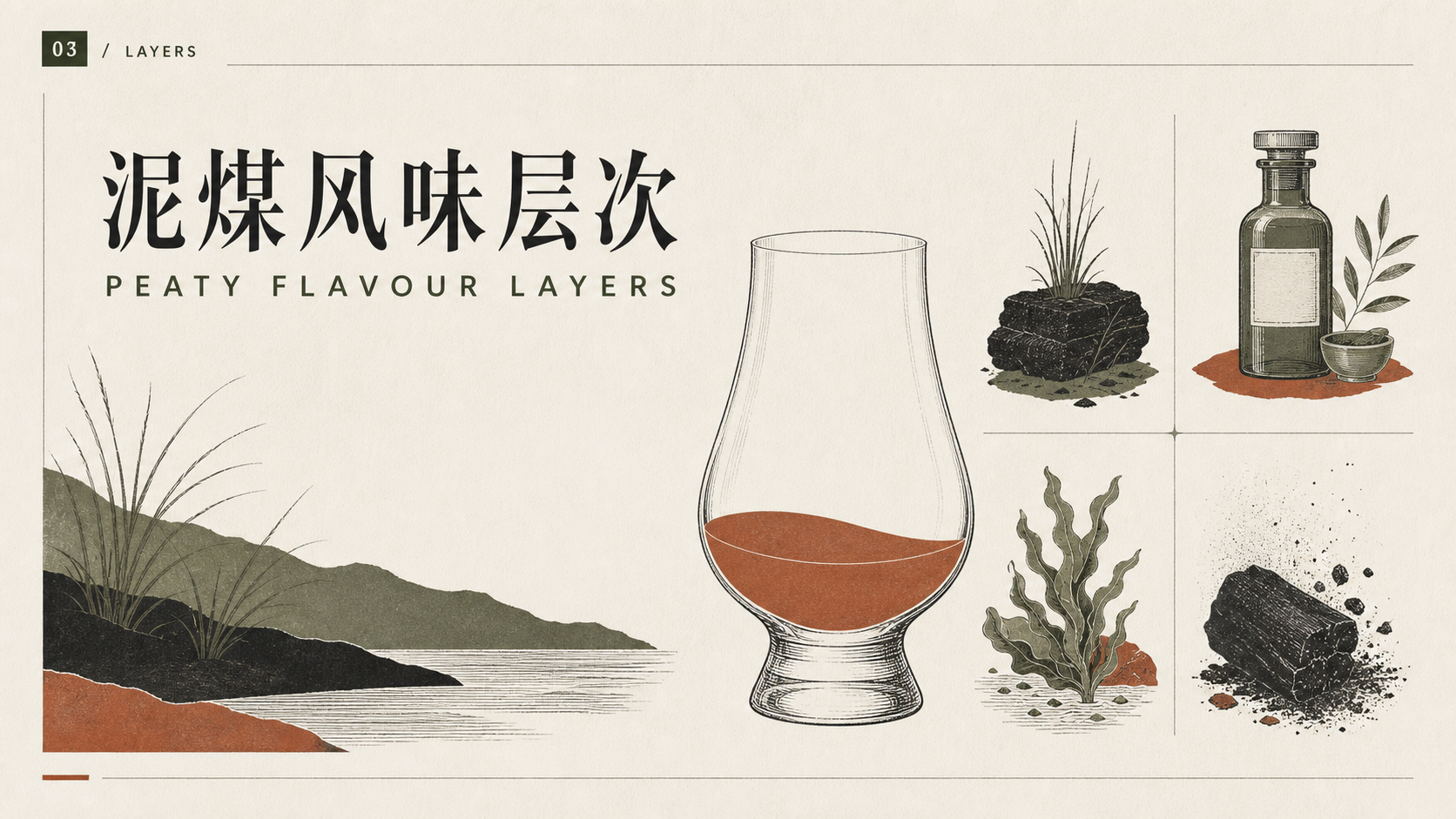
典型泥煤风味常让人联想到湿润泥土、沼泽腐殖、海藻、碘酒、消毒水、湿灰烬与焦油。它的核心是一种潮湿、厚重、带有矿物和药感的地底肌理。
Peat is an organic material formed over millennia as plant matter slowly decomposes in waterlogged, oxygen-poor bogs. Once an important fuel across Scotland’s island regions, it is also the essential source of peated whisky’s character. Peat itself is not the flavour in the glass; it is the material that carries and releases flavour compounds.
When burned, peat releases phenolic compounds including phenol, cresols and guaiacol. The industry often uses PPM—parts per million—to describe the concentration of phenols in malt. It can indicate the intensity of the raw material, but it does not determine, on its own, how smoky the finished whisky will taste.
Classic peat notes evoke damp earth, bog vegetation, seaweed, iodine, antiseptic, wet ash and tar. Their signature is a moist, weighty, mineral and medicinal texture that feels markedly different from ordinary fireside smoke.
烟熏:宽泛的风味表现
Smoke: the broader flavour family
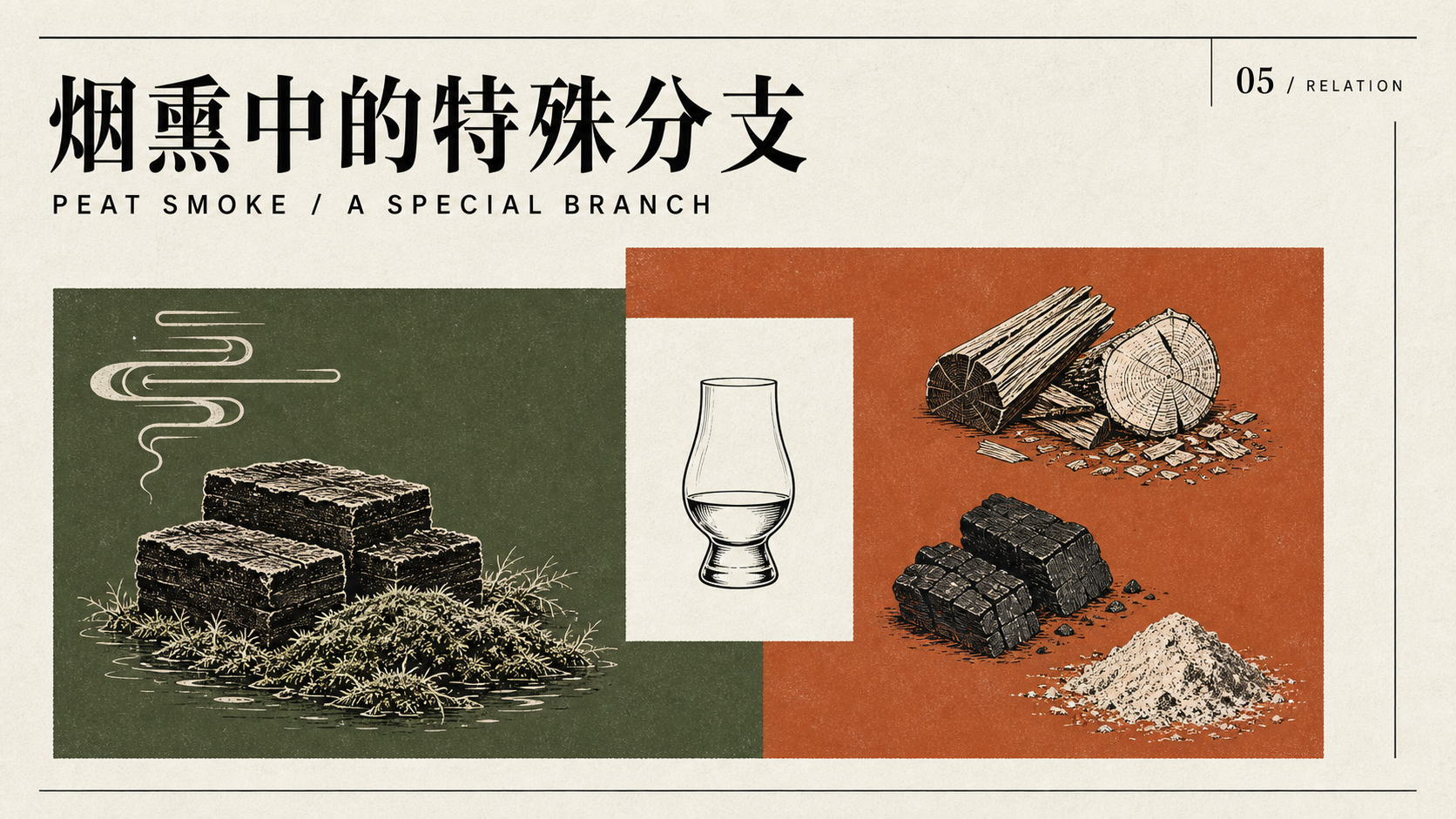
烟熏是燃料燃烧后,烟气附着于原料或在工艺中形成的一类风味统称。它的来源并不局限于泥煤:木材、煤炭、秸秆等燃料同样能够产生烟熏气息。
非泥煤烟熏往往更干燥、直接,容易让人想到柴火、木炭、烤木和干草木灰。它通常没有泥煤特有的潮湿腐殖与药感,在部分高地或斯佩塞产区采用特殊烘烤工艺的威士忌中也能遇见。
最简单的判断是:所有泥煤风味都带有某种烟熏感,但带有烟熏感的威士忌并不一定使用了泥煤。
Smoke is a broad family of flavours created when combustion aromas adhere to an ingredient or develop through production. Peat is only one possible source: wood, coal, straw and other fuels can all produce smoky notes.
Non-peat smoke is often drier and more direct, recalling a wood fire, charcoal, toasted timber or dry ash. It usually lacks peat’s damp, decomposed and medicinal character, and may appear in whiskies made with particular kilning or roasting practices in the Highlands or Speyside.
The simplest rule is this: every peaty profile contains a form of smoke, but a smoky whisky is not necessarily a peated whisky.
泥煤与烟熏的核心关系
How peat and smoke relate
因果关系
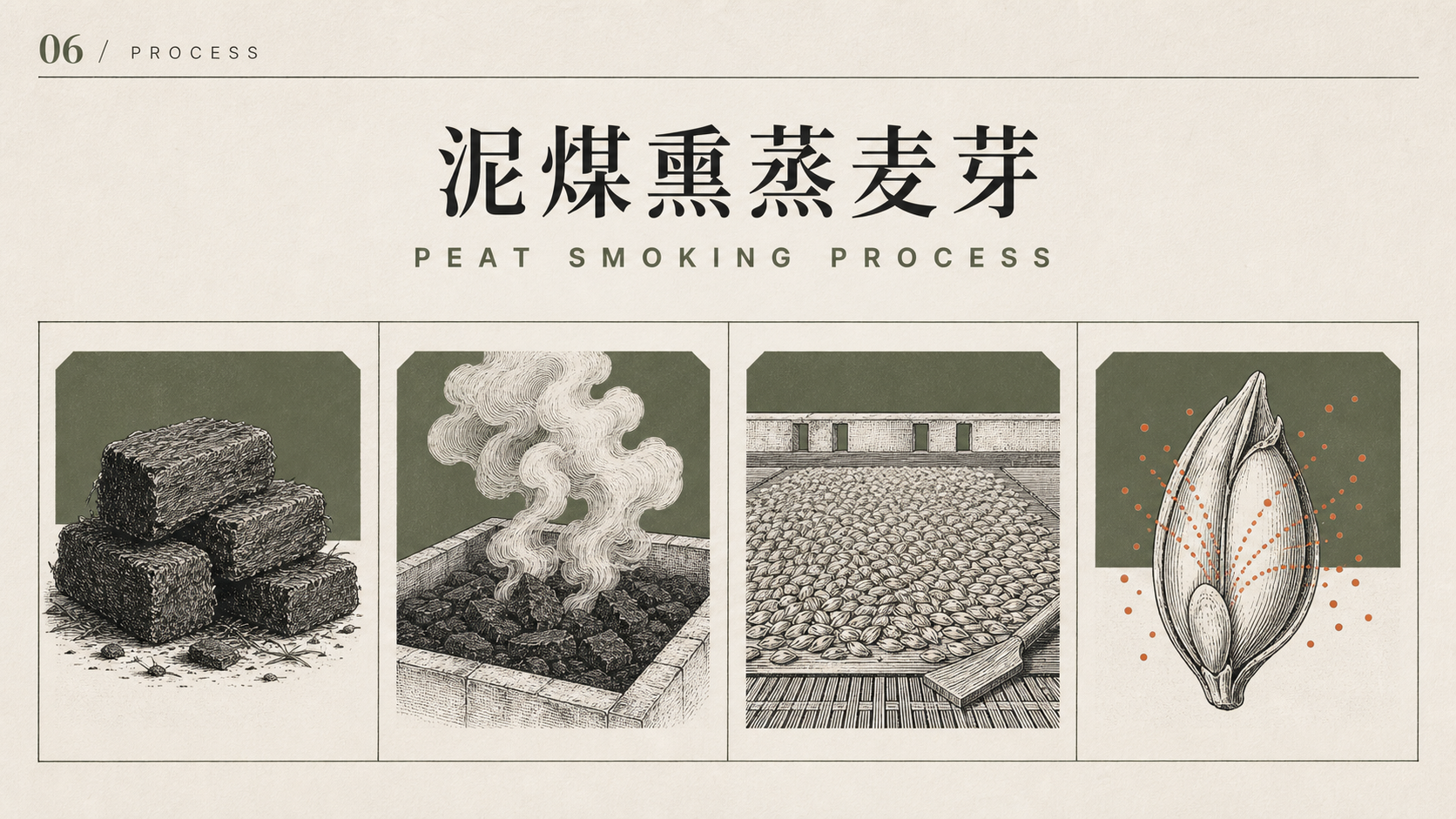
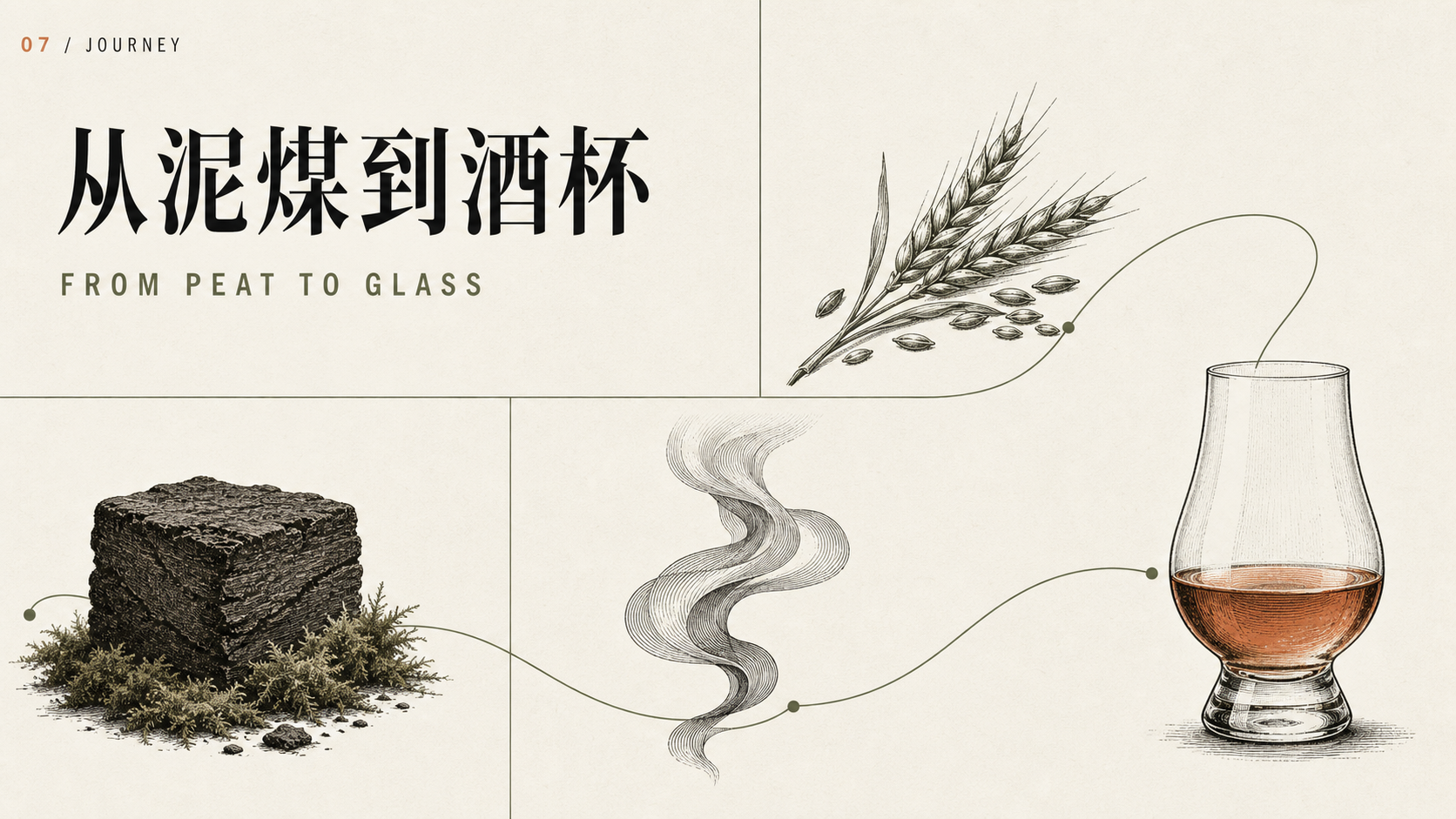
大麦发芽后,以燃烧泥煤产生的烟雾熏蒸、烘干麦芽。潮湿烟气中的酚类物质附着于麦芽, 并在发酵、蒸馏和熟成后留下可辨认的风味痕迹。
Cause and effect
After germination, barley is dried over peat smoke. Phenolic compounds bind to the malt and leave recognisable traces through fermentation, distillation and maturation.
包含关系
烟熏是宏观大类,包含木熏、草熏、煤熏和泥煤熏。泥煤烟熏只是其中最具复合感的一支, 以潮湿、药感与矿物感区别于普通干燥烟熏。
A nested category
Smoke includes wood, straw, coal and peat smoke. Peat smoke is a distinctive branch, set apart by damp, medicinal and mineral dimensions.
独立可变
高 PPM 不必然等于强烈烟火气。发酵、蒸馏、桶陈和装瓶强度都会改变感知, 让泥煤的药感、腐殖感与烟熏强度形成不同组合。
Independent variables
High PPM does not guarantee aggressive smoke. Fermentation, distillation, cask ageing and bottling strength reshape the balance between medicinal peat, earthiness and fire.
品鉴区分与常见误区
Tasting cues and common misconceptions
PEATY
泥煤风味
潮湿、厚重、复合
沼泽 · 碘酒 · 腐殖 · 焦油 · 海盐药感
Damp, weighty and layered: bog, iodine, humus, tar, sea salt and medicinal notes.
SMOKY
普通烟熏
干燥、轻盈、纯粹
柴火 · 木炭 · 烤木 · 干灰烬
Dry, lighter and direct: wood fire, charcoal, toasted timber and dry ash.
“泥煤味就是烟熏味。”烟熏只是泥煤风味的一层;泥土、药感和沼泽气息同样关键。
“Peat is simply smoke.” Smoke is only one layer; earth, medicine and bog-like notes are equally important.
“有烟熏就是泥煤威士忌。”只有泥煤熏蒸工艺形成的特征才属于泥煤风味;木材等燃料产生的烟熏并不等同于泥煤。
“Any smoky whisky is peated.” Smoke from wood or other fuels does not automatically indicate peat.
CONCLUSION
泥煤赋予烟熏一片土地。
泥煤是专属原料与风味本源,烟熏是通用风味结果。泥煤燃烧孕育了潮湿、 药感与矿物感交织的复合烟熏质地;烟熏则衬托出泥煤的火焰层次。 二者共同构成泥煤威士忌最经典、也最容易被误读的风味体系。
IN SHORT
Peat gives smoke a sense of place.
Peat is a specific material and source; smoke is a general flavour outcome. Burning peat creates a layered smoky texture shaped by damp earth, medicine and minerals, while smoke lends fire and lift to peat’s deeper character. Together they form one of whisky’s most distinctive—and most misunderstood— flavour systems.