BEFORE THE STILL
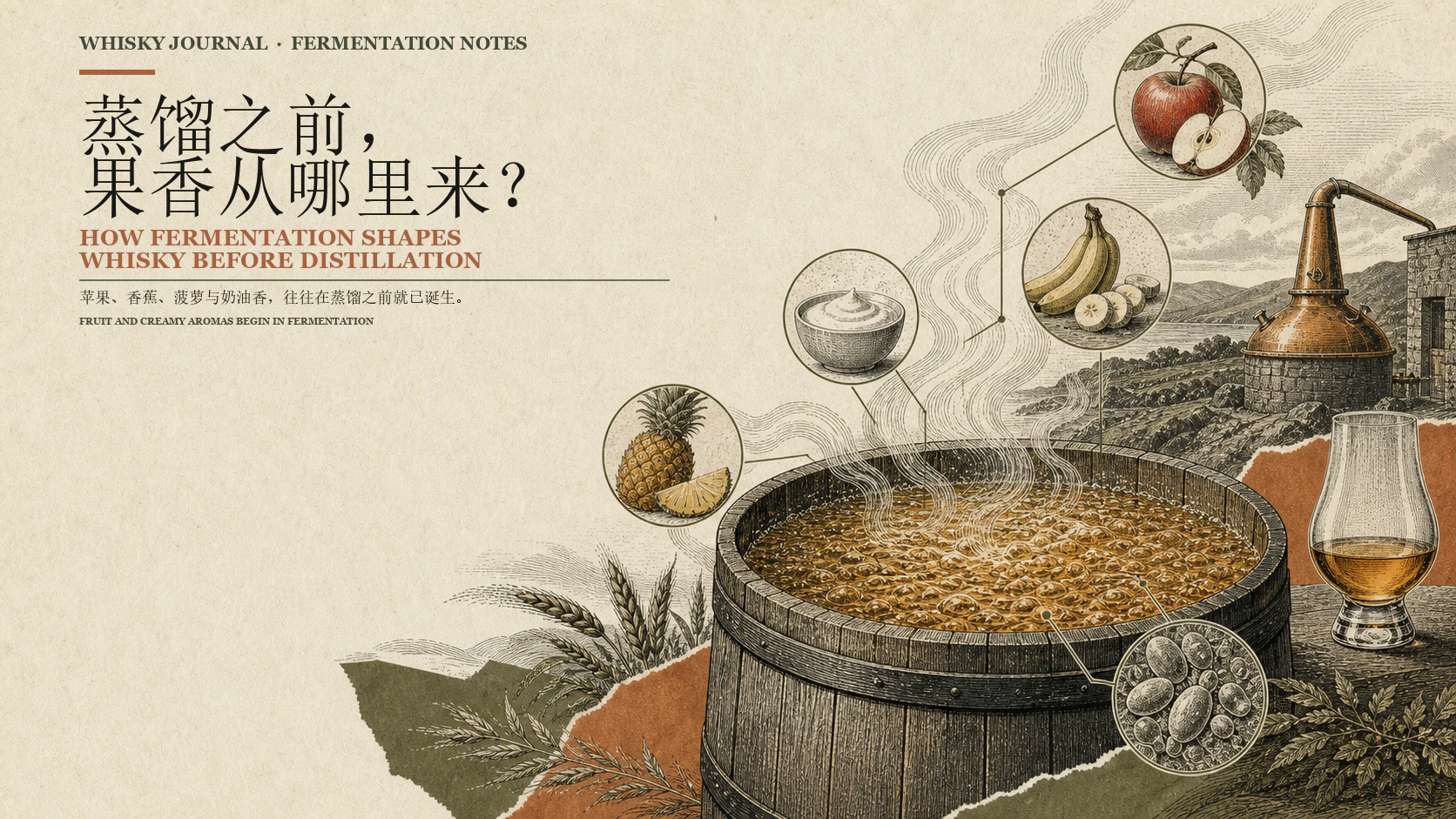
果香的起点,早于蒸馏器。
麦芽汁为风味提供原料,酵母与微生物把这些原料转化成果香、花香与乳脂气息,发酵时间则决定这套香气会走向清爽还是复杂。
蒸馏负责筛选风味,而发酵先创造了风味的可能。
Fruit begins before the still.
Wort supplies the building blocks. Yeast and microbes turn them into fruit, floral and creamy aromas, while fermentation time steers the result from clean to complex.
Distillation selects flavour; fermentation creates its possibilities.
麦芽汁为什么不仅是“糖水”
Why wort is more than “sugar water”
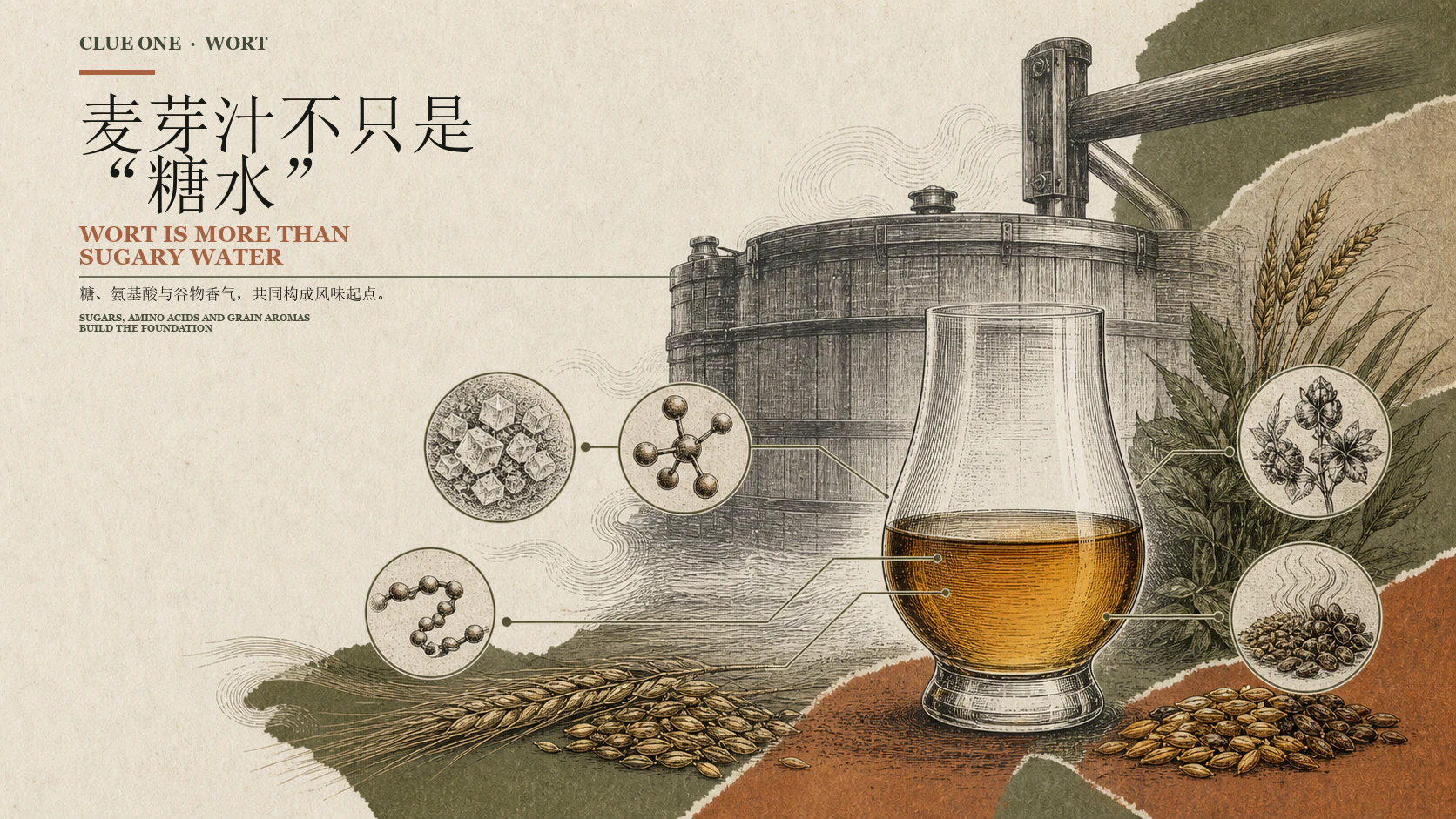
麦芽经过粉碎、糖化之后得到麦芽汁,多数人会简单将其理解为可供酵母食用的糖水溶液。但实际上,麦芽汁是一套成分复杂的风味基底,除麦芽糖、葡萄糖等可发酵糖以外,还含有氨基酸、多肽、酚类物质以及麦芽烘烤带来的基础谷物香气。
这些物质不只是供养酵母的养料,更是风味合成的原料。酵母会分解、转化麦芽汁内的各类组分,生成大量次级风味物质。麦芽汁本身的品质,直接限定了后续发酵能够诞生哪些香气,而非仅仅等待蒸馏与木桶来赋予风味。
Wort is more than sugary water. After mashing, wort contains not only fermentable sugars, but also amino acids, peptides, phenols and grain-derived aromas. These compounds feed yeast and act as building blocks for new flavours. The character of wort sets the starting aroma profile long before distillation begins.
酵母如何生成水果、花香与乳脂气息
How yeast creates fruit, flowers and cream
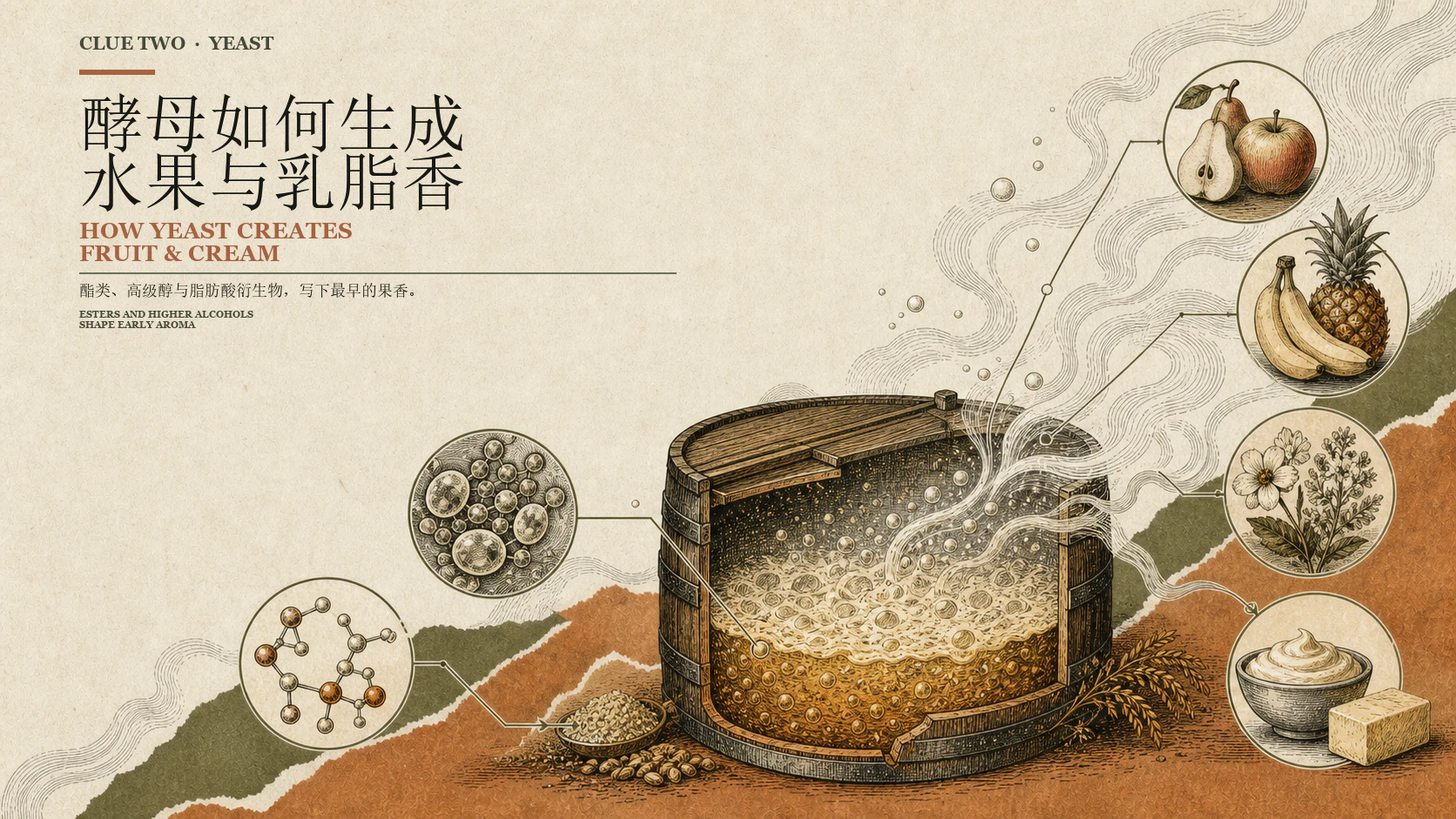
酵母在消耗糖分产生酒精与二氧化碳的同时,会释放大量酯类、高级醇,这正是威士忌果香的核心来源。乙酸异戊酯带来标志性的香蕉糖果香气;乙酸乙酯偏向清甜苹果、梨的气息;部分酵母菌株还会生成菠萝、热带水果以及柔和的花香。同时,发酵代谢产出的脂肪酸衍生物,构成杯中奶油、黄油般的乳脂质感。
不同酵母菌种、发酵温度,会极大左右香气走向。即使用一模一样的麦芽,更换酵母,最终新酒的果香面貌就会截然不同。
While yeast turns sugar into alcohol and CO₂, it produces esters and higher alcohols that create whisky’s fruitiness. Isoamyl acetate gives banana notes; ethyl acetate brings apple and pear. Certain strains deliver tropical pineapple and floral hints, while fatty-acid derivatives create buttery, creamy texture. Different yeast strains and fermentation temperatures drastically shift aroma, even with identical malt.
短发酵与长发酵有什么不同
Short fermentation versus long fermentation
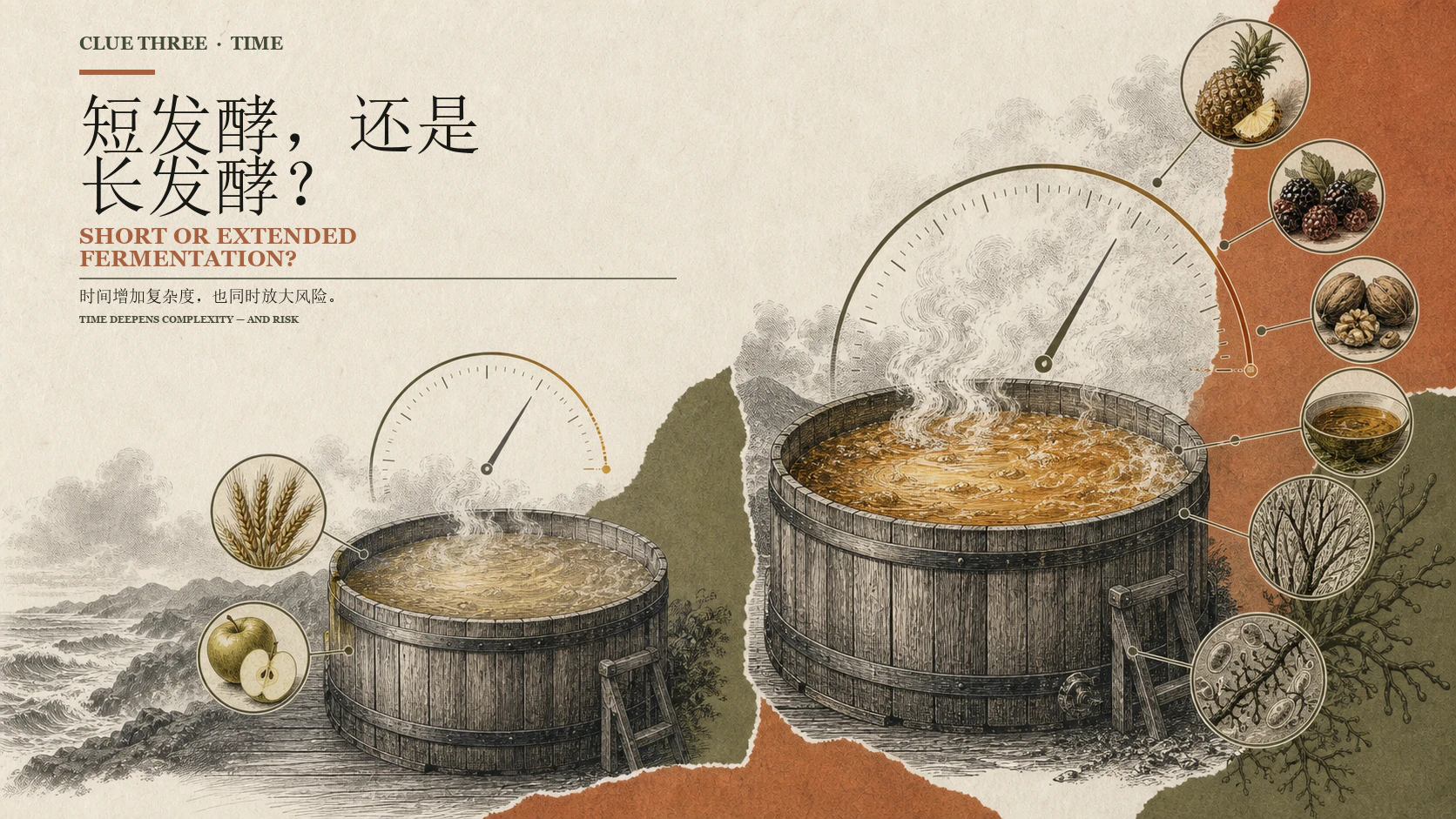
短发酵通常 48–72 小时,酵母快速消耗糖分,代谢偏向干净、直接的谷物与浅淡果香,风格清爽利落,杂质风味少。酒厂追求纯粹麦芽表达时,常会选择短发酵。
延长发酵至 72–120 小时甚至更久,糖分逐步耗尽后,酵母会进入营养匮乏的“饥饿阶段”,开启次级代谢。会诞生更丰富的热带水果、成熟浆果,同时更容易出现复杂的肉汤、坚果、泥土类副风味。长发酵不等于越好,复杂度提升的同时,也放大了风险,控制不当容易出现过重的怪味。
Short fermentation (48–72h) yields clean grain and light fruit notes, crisp and straightforward. Extended fermentation (72–120h+) pushes yeast into nutrient-starved secondary metabolism, unlocking richer tropical fruit, ripe berry, nutty and brothy complexity. Longer fermentation does not equal better quality; it amplifies both desirable complexity and unwanted off-flavours if poorly managed.
乳酸菌为什么未必是坏事
Why lactic bacteria are not always a fault
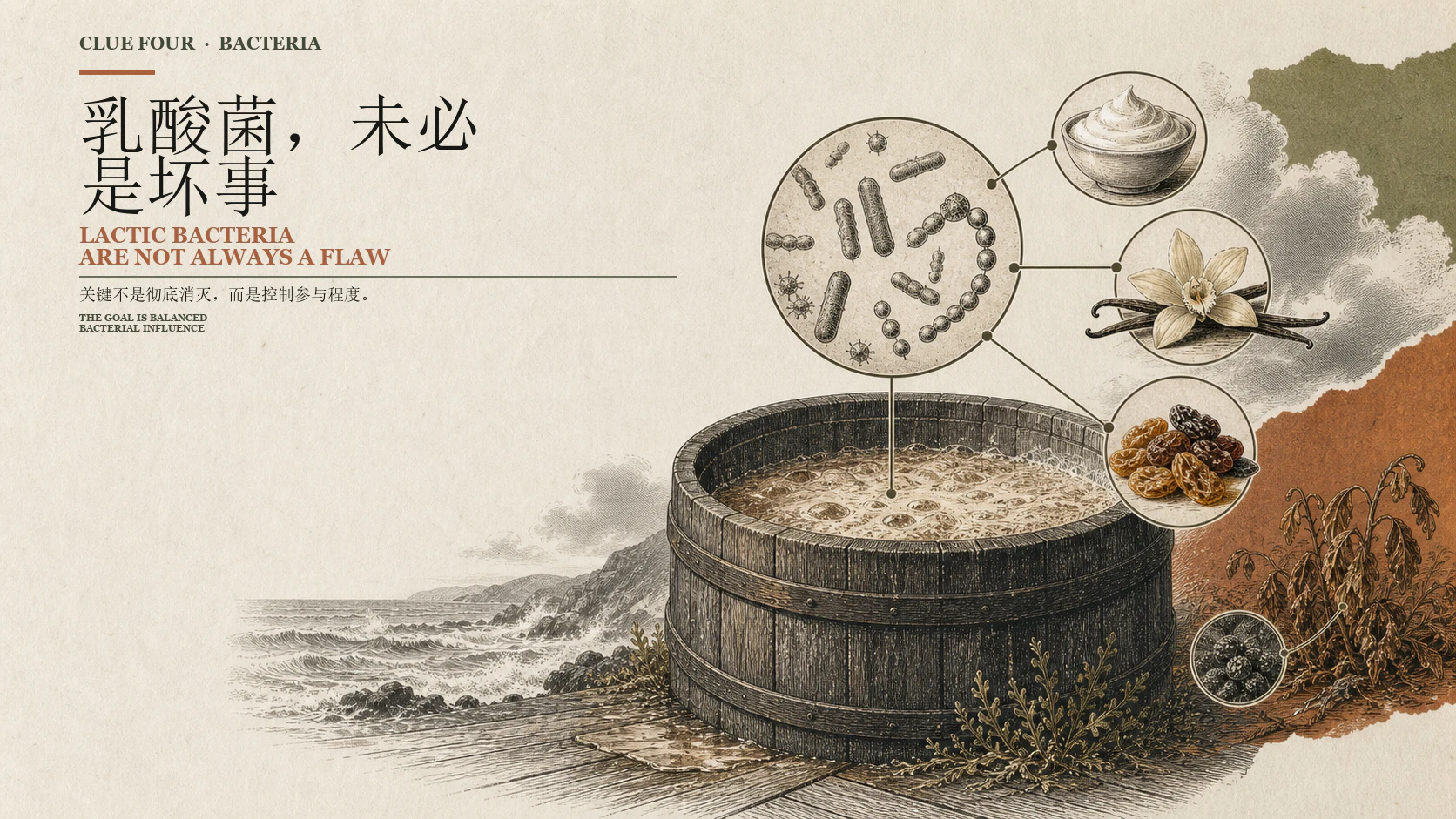
发酵桶内不只有酿酒酵母,环境带来的乳酸菌等杂菌会参与其中,发生乳酸发酵,生成乳酸。很多人默认细菌污染就是缺陷,但在威士忌生产中,适度的乳酸菌活动是刻意追求的工艺。
可控的乳酸菌代谢,带来酸奶、香草、柔和的蜜饯果香,增添圆润感,降低新酒尖锐感。一旦菌群过度增殖,则会出现酸泡菜、臭奶酪等不悦异味。关键不在于完全消灭乳酸菌,而是把握它的参与程度。
Wild lactic acid bacteria co-exist with distiller’s yeast. Excess bacterial activity creates unpleasant pickle or cheesy faults, yet controlled lactic fermentation is often intentional. It delivers yoghurt-like creaminess, soft confit-fruit notes and rounds off sharp new-make spirit. The goal is not total elimination, but balanced bacterial influence.
蒸馏会保留哪些发酵风味
Which fermentation flavours survive distillation
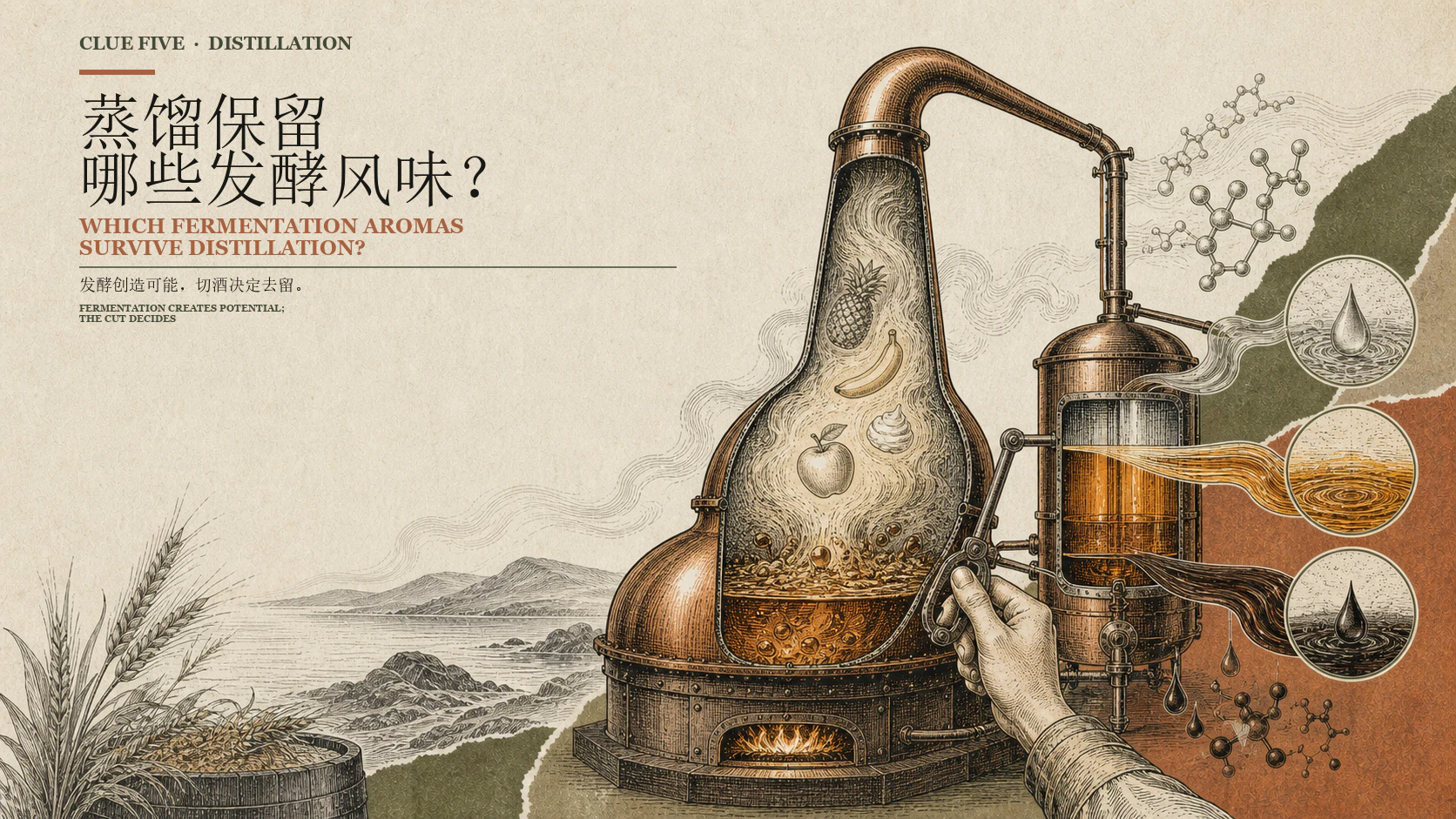
蒸馏不是全盘复制发酵液的香气,而是一次筛选。沸点较低的酯类果香物质,大多集中在酒头、酒心部分,可以顺利穿过蒸馏器,进入新酒。而大分子重质物质、部分酸类,会被截留在酒糟与酒尾当中。
这就解释了:发酵创造风味可能性,但蒸馏师的切酒决策,决定了能把多少果香、乳脂特征传递到最终酒液。即便发酵成果出色,粗暴的切酒也会抹杀掉发酵阶段得来的水果气息。
Distillation filters rather than copies fermented-wash aroma. Low-boiling fruit esters pass over in foreshots and heart, while heavy compounds and many acids remain in tails and spent wash. Fermentation creates flavour potential, but the distiller’s cut selection decides how much of that fruity, creamy character survives into new-make spirit. Poor cutting can erase hard-won fermentative aromas.
饮者如何在杯中辨认这些线索
How to recognise the clues in the glass
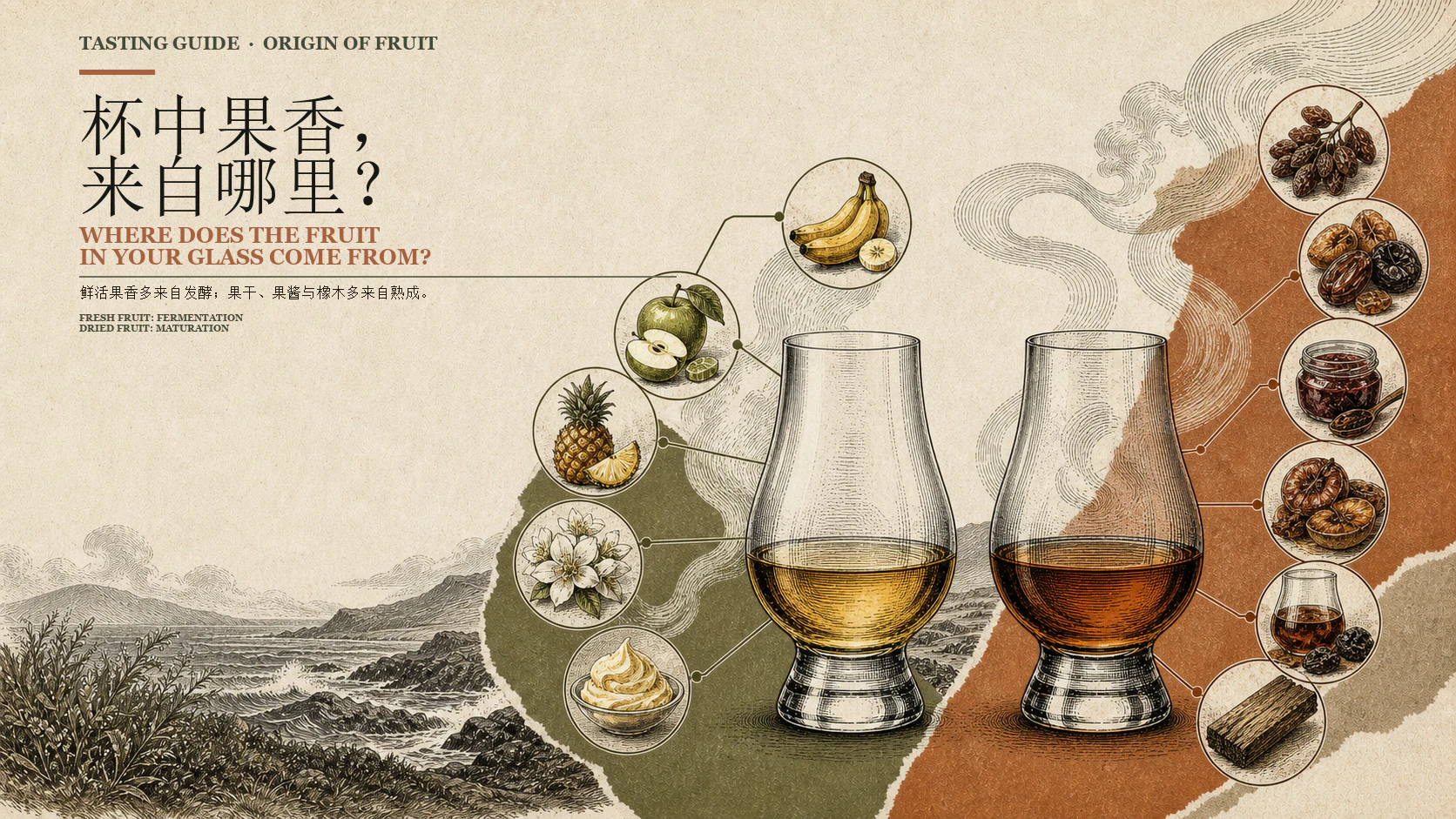
发酵原生香气
香蕉、硬糖苹果、新鲜菠萝、黄油奶油——大多在蒸馏前就已经成型。
木桶熟成香气
蜜煮果干、葡萄干、果酱、烘烤果香——更多来自雪莉桶等桶型贡献。
当一杯威士忌,几乎没有葡萄干、果脯,却依旧有着鲜活的香蕉、青苹果香气,这便是发酵工艺留给杯中最直接的印记。
In tasting, try separating fruit-flavour origins: banana, candy-apple, fresh pineapple and buttery cream mostly stem from fermentation. Dried fruit, raisin and jam come chiefly from cask maturation. When you encounter bright banana or green-apple notes with little dried-fruit character, you are tasting the direct fingerprint of fermentation, before distillation and cask ageing.
THE FIRST FLAVOUR MAP
先读懂发酵,再理解杯中的果香。
木桶会改变并放大风味,但苹果、香蕉、菠萝与奶油气息的第一笔,常常早已由麦芽汁、酵母、时间与菌群共同写下。
Understand fermentation, then read the fruit in the glass.
Oak transforms and amplifies flavour, but the first strokes of apple, banana, pineapple and cream are often written by wort, yeast, time and microbes.